
FREE FREIGHT AUSTRALIA WIDE FOR ORDERS OVER $139

Advanced Wound Care: Innovations in Dressing Technology
Advanced wound care dressings do things that gauze and antiseptic never could. They hold moisture at the wound bed where it speeds healing. They manage bacterial load without antibiotics. They stay in place for days at a time.
For Australian clinicians and carers managing the country's roughly 450,000 chronic wound patients, knowing what each category does is the difference between weeks of healing and months. Our wound care guidance hub sets out the broader framework; this piece focuses on the dressing categories themselves.
Why advanced wound care dressings matter
The shift to advanced wound care started with one finding. George Winter's 1962 research, published in Nature, showed that wounds healed almost twice as fast when kept moist under a dressing compared with wounds left to dry and scab. That principle, moist wound healing, became the foundation of every dressing category that followed.
Chronic wounds cost the Australian health system roughly $6 billion a year, with venous leg ulcers, diabetic foot ulcers, pressure injuries and skin tears accounting for most of that load (Monash University, 2025). The dressings we now have are tools that, used well, shorten healing time and reduce infection. Used poorly, they waste money and prolong wounds.
Silver and antimicrobial dressings
Silver ions kill bacteria, including strains that have stopped responding to antibiotics. That's why silver dressings sit on most acute care wound trolleys.
Silver works best on wounds with confirmed signs of infection or critical colonisation: increased exudate, new pain, redness creeping past the wound edge, stalled healing. The international consensus is the two-week challenge protocol: use silver for two weeks, then reassess. If infection signs resolve, switch off silver. Clean wounds don't need it, and some silver formulations actually slow burns healing.
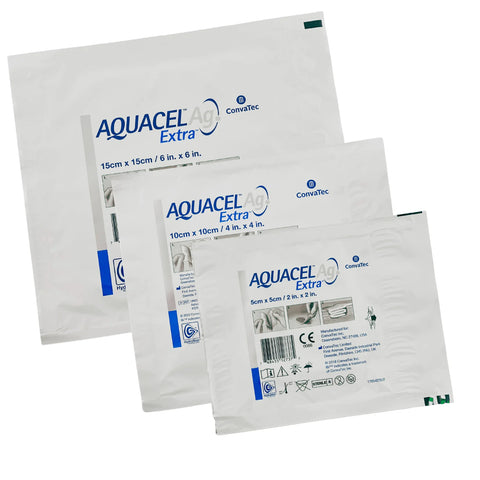
Aquacel Ag, Mepilex Ag and Allevyn Ag are commonly used silver options in Australian practice. Our silver dressings range carries the main brands. For wider antimicrobial coverage, iodine, PHMB and medical-grade Manuka honey products also have roles depending on the bacterial profile and the wound itself.
Foam dressings
Foam dressings absorb moderate to heavy exudate while keeping the wound bed moist. The soft surface cushions pressure points, which is why they show up so often on heels, sacrum and bony areas at risk of pressure injury.
Most foams sit in place for several days. Silicone-bordered versions (Mepilex Border, Allevyn Life) reduce trauma on dressing changes, which matters for fragile skin in older patients and for the discomfort of removal that patients and carers actually feel. Plain foams without adhesive borders, like Biatain Non-Adhesive, suit secondary fixation under bandages or compression. For a closer look at specific products including Allevyn Life, see our spotlight on Zetuvit, Allevyn Life and Bactigras.
If you are matching a foam to a wound, exudate level is the first question, periwound skin fragility is the second. Our foam dressing range sets out the options.

Alginate and hydrofiber dressings
Alginate dressings are made from seaweed-derived calcium fibres that turn into a gel on contact with wound fluid. They handle heavy exudate, fill cavities, and lift off without disturbing new tissue when irrigated.
Hydrofiber dressings work on similar principles but absorb fluid vertically rather than spreading it sideways. That stops moisture damaging the surrounding skin, which is a real risk when exudate is heavy. Aquacel is the original hydrofiber and the brand name many clinicians still ask for; Kaltostat is the most common alginate. Both are workhorse dressings for stage 3 to 4 pressure injuries, surgical cavity wounds and heavily exuding ulcers.
See the full alginate dressings range for options.
Hydrocolloid and film dressings
Hydrocolloids carry a gel-forming layer that activates on contact with wound fluid. They work well on light to moderately exuding wounds, stay in place for days, and form a flexible seal over awkward areas like elbows and heels. The yellowish gel and slight odour visible on removal is normal, not a sign of infection.
Film dressings (Tegaderm, Opsite Flexigrid) are thin, transparent and semi-permeable. They suit superficial wounds, IV site fixation, and secondary protection over other dressings. Browse the hydrocolloid dressings range for primary closure and recovery applications.
Collagen and specialist dressings
For wounds that have stalled in the middle phase of healing, collagen dressings can shift things forward. They provide a scaffold for new tissue, attract growth factors, and are most often used on diabetic foot ulcers and chronic venous ulcers that aren't responding to standard care.
Negative pressure wound therapy (NPWT) sits at the more specialised end. A sealed dressing connects to a small vacuum pump that draws excess fluid out and pulls the wound edges together. It is used in hospital and increasingly in community care for large, deep or complex wounds.
These aren't first-line dressings. Use them where simpler options haven't delivered.
Choosing the right dressing
The dressing is a means to an end, not the end itself. Australian guidelines use the TIME framework as the starting point: Tissue (deal with dead tissue), Infection (manage bacterial load), Moisture (balance exudate), Edge (assess whether the wound is advancing).
Start with the wound. Is it dry, moderately moist, or soaking? Is there visible infection? Is the surrounding skin fragile? Match the dressing to that picture, not the other way round. If you are new to wound care, our beginner's guide to wound dressings covers the basics before you get into the category-by-category detail.
If you're uncertain, ask. Call us on 03 5443 2239 during business hours, or send the wound details through and we'll come back to you. Our team has people who have spent decades in wound care across hospital, aged care, community and remote practice. Phone advice is part of how we sell.
What's next
Smart dressings are the next frontier. Versions in trial include embedded sensors that track temperature, pH and bacterial load at the wound surface, with results sent to a phone or clinical system in real time. Some prototypes deliver targeted antibiotics or growth factors on demand.
None of this has reached general Australian practice yet. The advanced products available today, used with the right framework, already deliver outcomes that would have been impossible thirty years ago.
Frequently asked questions
Can I use a silver dressing on any wound?
No. Silver dressings are for wounds with infection or critical colonisation. On clean wounds, silver delays healing and wastes money. Use the two-week challenge protocol, then reassess.
How often should foam dressings be changed?
Every three to seven days for most wounds, sooner if the dressing leaks or the wound clinically changes. Visible moisture reaching the dressing edge (strikethrough) tells you it is time to change.
Why is the gel under my hydrocolloid yellow and smelly?
That is normal. The gel forms as the dressing absorbs wound fluid. Slight odour and discolouration on removal are expected and don't indicate infection. True infection presents with spreading redness, increasing pain and fever.
Is medical-grade Manuka honey the same as honey from the supermarket?
No. Manuka wound products listed on the ARTG are sterilised, standardised and tested for activity. Kitchen honey is not sterile and should not go near a wound.
Where to from here
Wound care is a clinical judgement field. The dressings on the shelf today let practitioners make better choices than ever before; using them well comes down to assessment, knowledge of the categories, and willingness to switch products when the wound is not responding.
For deeper reading, see our wound care guidance hub, or browse the full wound care product range.