FREE FREIGHT AUSTRALIA WIDE FOR ORDERS OVER $139
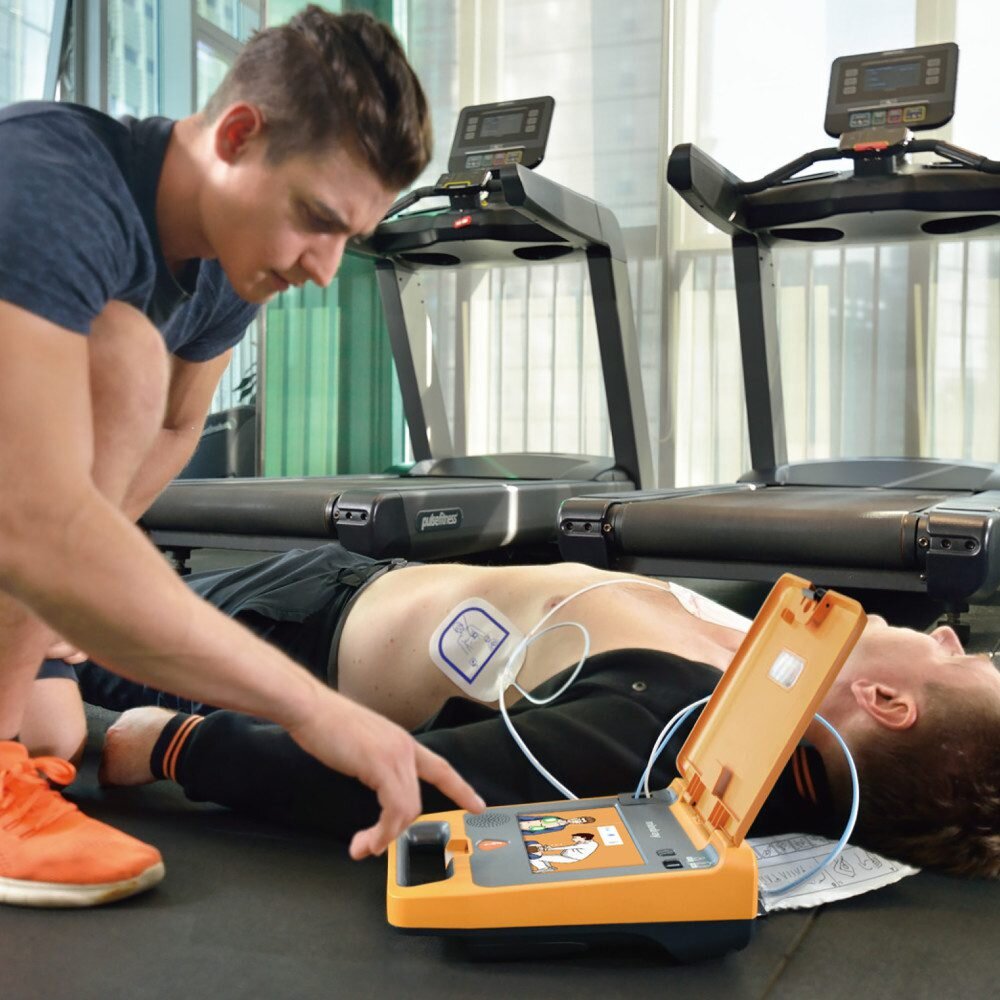
Mindray BeneHeart C1A Fully Automatic Defibrillator (AED)
Mindray BeneHeart C1A Fully Automatic Defibrillator (AED)
Product Code:132629
Regular price
$1,900.00
Regular price
Sale price
$1,900.00
Unit price
per
Taxes included.
Shipping calculated at checkout.
%3Cp%3E[points_amount]%20available%20on%20this%20item%3C/p%3E
Total:
Couldn't load pickup availability
Once this unit confirms a shockable rhythm, it delivers the shock itself. No one has to press a shock button, which takes a decision away from a bystander who has never used a defibrillator. Mindray builds the C1A in two versions and this is the fully automatic one, intended for adults and children in sudden cardiac arrest.
ALWAYS READ THE LABEL AND FOLLOW THE DIRECTIONS FOR USE
If you suspect someone has had a sudden cardiac arrest, call 000 immediately and ask for an ambulance. An AED will only deliver a shock to a person with a shockable rhythm. Follow the verbal and visual prompts on the AED until medical treatment arrives. Additional emergency treatment such as CPR and rescue breaths may be required until medical treatment arrives.
Opening the lid powers the unit on and voice prompts run the responder from there, with the pads cable kept connected so there is nothing to plug in under pressure. Mindray measures under eight seconds from the lid opening to charge done at 200 J, with a new battery at 20 +/- 5 degrees C.
If the rhythm is not shockable, the unit moves into CPR mode by default and paces compressions with a voice guide and a metronome at the rate the AHA and ERC recommend. Real-time CPR feedback is available on this series but needs the CPR sensor, which is a separately ordered accessory. A switch on the case selects child mode, which lowers the delivered energy and changes the voice guidance. Placement is set by the diagram printed on the pads package rather than by the switch, and on a child this unit's diagram puts one pad on the chest midline and one on the back midline, so follow the diagram supplied with the pads.
Features
- Fully automatic shock delivery, so a first-time responder never has to judge the moment to press
- Adult and child modes on one switch, though two of the four pad models in this series are child-only, so call 03 5443 2239 and we will confirm the set supplied before a mixed-age site relies on one unit
- Voice prompts, a voice CPR guide and a metronome to hold the compression rate
- Daily, weekly, monthly and quarterly self-testing, reported on a status indicator Mindray asks you to check and record every day
- IP55 and a 1.5 m drop rating for site use, though long-term storage is rated 15 to 35 degrees C, so a vehicle mount needs shade
Specifications
Defibrillation
- Waveform: biphasic truncated exponential, compensated automatically for patient impedance, the electrical resistance of the chest
- Adult energy: selectable 100 to 360 J
- Child energy: selectable 10 to 200 J
- Shock series: 1, 2 or 3 shocks, configurable. Mindray states the default meets the 2020 AHA and 2021 ERC guidelines
- Energy accuracy: +/-10% of the setting or +/-2 J, whichever is greater
- Patient impedance range: 25 to 300 ohms
- Rhythm analysis: under 5 seconds
- Lid opened to charge done: under 8 seconds at 200 J and under 15 seconds at 360 J, with a new battery at 20 +/- 5 degrees C. From power on, under 7 seconds at 200 J
- Mindray states the unit meets IEC 60601-2-4
Power and consumables
- Battery: disposable, 12 V, 4200 mAh. Mindray's 2019 datasheet gives the chemistry as lithium manganese dioxide and the weight as 300 g, and the current manual restates neither
- Battery standby, all at 20 +/- 5 degrees C on a daily self-test and not in use: 5 years with self-test reporting off, 3 years reporting weekly over wireless, 2 years reporting daily
- Battery capacity from new at 20 +/- 5 degrees C, wireless off and voice volume low: at least 15 hours with no discharges, or 300 shocks at 200 J with a minute of CPR between them, or 400 shocks at 200 J at three a minute
- Electrode pads: multifunction, disposable, supplied five sets per pack on the MR60, MR62 and MR63, on a 1.2 m preconnectable cable, with a printed expiry on the pouch readable through the pad expiration window without opening the unit
- Pad shelf life sealed: 36 months on the MR60, MR61 and MR63 pads and 60 months on the MR62, which Mindray rates on 25 degrees C storage and derates above it
Physical and environmental
- 210 mm (w) x 286 mm (d) x 78 mm (h), plus or minus 20 mm
- 2.0 kg plus or minus 0.4 kg including one battery, excluding the Wi-Fi and cellular modules
- Display: 1.96 inch dot-matrix LCD, 240 x 64 pixels
- IP55 ingress protection, and a 1.5 m drop onto each of six surfaces
- Operating -5 to 50 degrees C; storage -30 to 70 degrees C short term, 15 to 35 degrees C long term; humidity 5 to 95% non-condensing
What's in the box
Supplied with one disposable battery and one connected set of electrode pads. The CPR sensor is a separately ordered accessory. Call 03 5443 2239 and we will confirm the exact supplied configuration before you order.
For a child, Mindray's instruction is to use dedicated paediatric pads where they are available and fall back to the adult pads on child mode only when they are not, so ask about a paediatric set for a school or childcare site. Four pad models run across this series on two different shelf lives, so the same call will confirm the pad model supplied, its expiry and the current pack. That number also covers replacement pads and batteries, the recurring cost on any AED.
Usage
Mindray's sequence starts before the unit does. Its first step is to confirm the patient is unresponsive and not breathing or not breathing normally, then call 000 and ask for an ambulance. Starting CPR while somebody else fetches the unit comes from the ANZCOR resuscitation sequence rather than from the manual. Open the lid to power it on, then follow the voice prompts.
Bare the patient's chest and apply the pads as shown on the pad illustrations, then stand clear while the unit analyses. Nobody is to touch the patient from the moment analysis begins until after the shock has been delivered, and do not wait for the unit to say so: Mindray records that the spoken do-not-touch warning is interrupted once the unit is ready to shock. Where the rhythm is shockable it announces the shock and counts down from three before delivering it itself.
Shockable or not, the unit then prompts you through CPR and re-analyses when the CPR time expires, so the cycle runs until the patient is conscious and breathing normally, and you stay with them until the ambulance arrives. Read the instructions for use before the unit goes into service, and make sure the people likely to reach for it know where it is.
Safety warnings
Mindray states that some low-amplitude or low-frequency rhythms, and some VT rhythms, may not be interpreted as shockable. Never set the adult and child switch to adult mode while paediatric pads are in use, because the pads can be damaged and analysis delayed. Leave a pad pouch sealed until use, and replace the pads if it is not intact. Act on a red or unlit status indicator the day you see it, because either state means the unit is not ready.
The full warnings list is in Mindray's operator's manual for the BeneHeart C and S series (PDF), revision 2.0 of December 2025, which is the current issue and the one to hand to whoever services the unit.
Care and storage
Keep a set of in-date pads connected at all times so the unit is ready between checks. After it has been used on a patient, disconnect the used pads and connect a new set before turning it off, because the unit checks for new pads at shutdown. Mindray asks for the status indicator to be checked every day and the result recorded on its inspection record, so build it into a daily walk-past rather than the kit round: flashing green is standby and ready, flashing red means a failed self-test or new pads not connected after use, and no light means the battery is missing or has failed. Mindray does not recommend sterilising the unit.
Mindray asks for the pad expiry to be checked monthly through the pad expiration window. On its maintenance schedule the daily and weekly self-tests function-test the main control, therapy and power modules, check the pads connector is in position and run a 1 J charge and discharge, and it is the monthly and quarterly tests that add the pad expiry check, where the supplied pads carry that function. A weekly glance at the indicator is therefore not a check that the pads are in date. Batteries held above 38 degrees C for long periods lose operating time and standby life, so keep the unit inside the 15 to 35 degrees C long-term band.
Compliance
Trade name: Mindray BeneHeart C1A Fully Automatic Defibrillator (AED), an automated external defibrillator. Mindray states the intended use as adults and children in sudden cardiac arrest who are unresponsive and not breathing or not breathing normally, with voice and, where the unit is configured for it, visual guidance through CPR, in public places and facilities, operated by people trained in its operation. Mindray adds that the operator should be trained in basic life support, advanced cardiac life support or other emergency medical response. Mindray lists consciousness and breathing as the contraindications.
Common questions
What is the difference between the fully automatic and the semi-automatic C1A?
The fully automatic version delivers the shock itself once it confirms a shockable rhythm, where the semi-automatic version asks the responder to press a shock button. The rest of the rescue sequence is the same on both, and this listing is the fully automatic version.
Does it report to a monitoring platform over Wi-Fi or 4G?
Wireless reporting is a module option on this series rather than a standard fitting, and it costs standby life, because a unit that sends self-test reports runs its radio. Mindray rates the battery at 5 years standby with reporting off, 3 years reporting weekly and 2 years reporting daily. Call 03 5443 2239 and we will confirm which configuration is supplied before you order.
How long do the pads and the battery last?
They run on separate clocks. The battery is rated at 5 years standby at 20 +/- 5 degrees C, self-testing daily and not sending self-test reports. Sealed pad shelf life is 36 months on the MR60, MR61 and MR63 pads and 60 months on the MR62, so work from the printed expiry on the pouch and the pad expiration window rather than a headline figure, and call 03 5443 2239 and we will confirm the pad model supplied with the unit you are buying.
FAD has been family-owned since 2011 and stocks competing AED brands side by side, so a call to 03 5443 2239 is about where the unit will be mounted and who is likely to use it, not about moving one brand. Orders ship nationally from our East Bendigo warehouse and Sydney fulfilment centre.
An AED on a wall only becomes a rescue when people have been trained to reach for it, the argument in our article on defibrillator training in high-risk workplaces. For a site rather than a home, the workplace first aid compliance guide covers where an AED sits alongside your other obligations. Most sites pair a unit with workplace first aid kits and a barrier device from the CPR masks range, and you can compare this one against the rest of the defibrillator range.